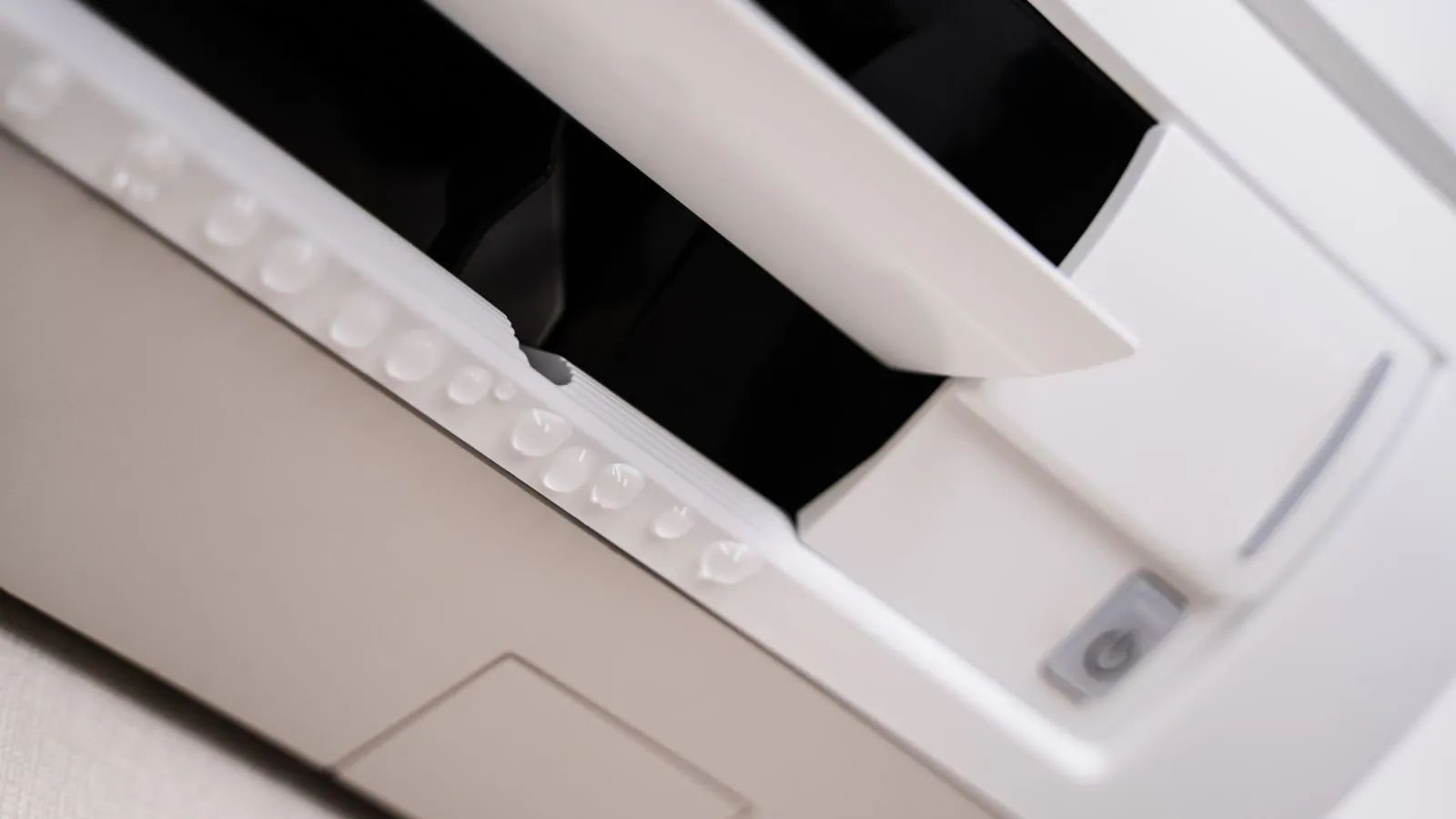
Air conditioning removes moisture from indoor air, and that water leaves through a condensate drain line. When the line clogs with algae and dust, the drain pan overflows and water soaks whatever is below. AC leak water damage often starts quietly in an attic or a closet and only shows up as a stain on a ceiling.
This page covers water from the cooling system, whether a split system, a central air handler or a window unit. It is separate from roof leaks and supply-line breaks, though the damage can look the same.
How condensate causes damage
On a humid day an air conditioner can remove a lot of water from the air, and all of it runs to a pan and a drain. If the primary drain clogs and no secondary pan or float switch stops the unit, the water backs up. It can drip through an attic floor into a ceiling, or run down a wall from a closet air handler.
Because the water is usually clean condensate, it is typically Category 1, but it can grow slime and bacteria in the pan, and the water becomes more of a concern if it sits for days. A musty odor near the air handler is a hint to check it.
Signs of a cooling system leak
- A stain or bubbling paint under an attic air handler
- Water in the drain pan or a pan that is rusted through
- The system shutting off, which a float switch can cause
- A damp smell in a closet or utility room
- Ice on the evaporator coil, which melts into the pan when the system turns off
Cleanup and repair steps
Turn the system off first. A technician then cleans out the drain line, which an HVAC specialist handles. Restoration extracts water, tests wet insulation, drywall and framing with a moisture meter and dries them with air movers and a dehumidifier.
A stained ceiling below an attic unit is repaired as described in ceiling water damage repair, and a wet wall behind a closet unit follows the steps on the wall and drywall repair page.
| Symptom | Likely cause | Who helps |
|---|---|---|
| Water in the pan | Clogged drain line | HVAC technician |
| Ceiling stain below the unit | Overflowing pan | HVAC technician and restoration |
| Ice on coils | Airflow or refrigerant issue | HVAC technician |
| Musty air at vents | Damp insulation or duct | Restoration moisture check |
A slow drip behind a ceiling can run for weeks before it shows.
A Norwalk climate note
Norwalk summers produce long stretches of humid weather, and the NOAA 1991 to 2020 normals list a record high of 108 degrees Fahrenheit. Systems run harder in those stretches, so a drain line that was barely flowing in spring is most likely to clog in July. Having the line flushed before summer is a practical step to take.
Houses with attic air handlers carry the most risk, because a leaking pan is out of sight. A float switch in the pan or the drain line that shuts the system down when water rises is an inexpensive safeguard worth asking an HVAC contractor about.
Mold watch after an AC leak
If insulation or drywall near a unit stays damp, mold can start to grow. EPA guidance says to keep indoor humidity below 60 percent, ideally between 30 and 50 percent. When a leak has been running for a while, the mold remediation page explains what testing and removal follow the ANSI/IICRC S520 standard.
What affects AC leak water damage cost
Most AC leak jobs are about a small area but can be hidden in the attic:
- How long the drain was clogged
- Whether insulation and drywall were reached
- Ceiling height and texture
- Number of drying days
- Whether HVAC repair is required first
Whether a policy responds often depends on how long the leak ran and whether the cause was maintenance. Check your policy or ask your insurer. Want your real number? Call dispatch and describe the stain.
AC Leak Water Damage questions in Norwalk, OH
Why does my AC drip water inside?
Usually because the condensate drain is clogged or the drain pan is full or cracked. Turn the system off and have an HVAC technician clear it.
Can an AC leak ruin a ceiling?
Yes. Water collects above a ceiling, soaks insulation and drywall and then shows as a stain, sometimes weeks later.
Do I need to call restoration or an HVAC technician?
Both in many cases. The HVAC technician stops the leak. Restoration dries the insulation, framing and drywall that got wet.
Water still spreading in Norwalk? The dispatch line answers around the clock.