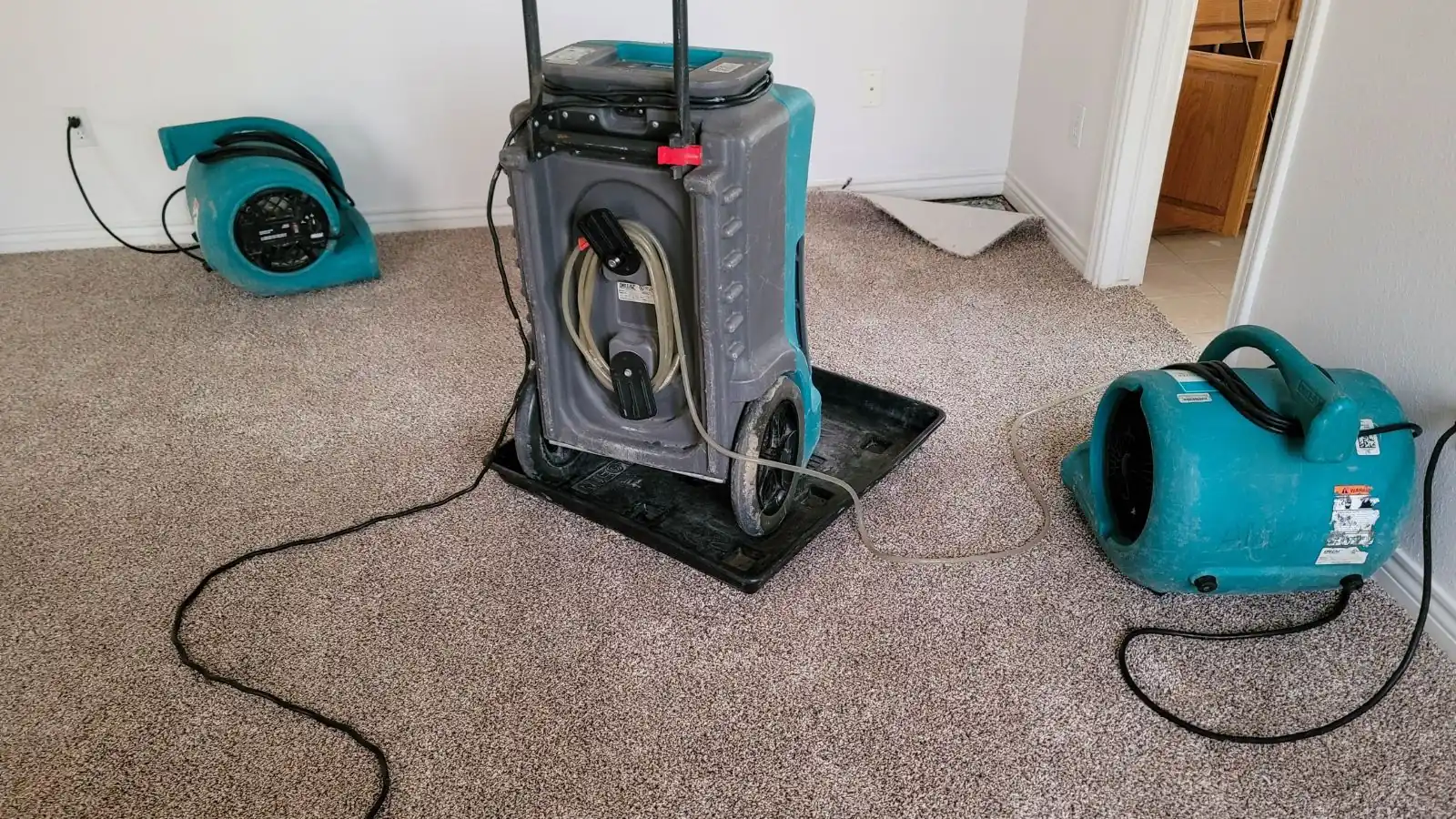
Structural drying is the process of bringing wet building materials back to their normal moisture content. It is also called water mitigation, and it is the stage that follows extraction in nearly every water damage job in Norwalk. A room that feels dry can still hold water inside drywall, framing and subfloor.
The house feels damp and I do not know how to dry it out. What do I do?
If you searched for how to dry a wet house, a dehumidifier for water damage or moisture mapping, you are describing this service. In plain words, it means removing standing water, finding every wet spot with meters and then moving air and removing humidity until readings return to normal. A single household fan and open windows rarely do that.
Moisture mapping comes first
A technician uses a pin or pinless moisture meter on drywall, wood and concrete and a thermal camera to see temperature differences caused by wet material. The readings are logged on a floor plan, which becomes the map of the job. Day-by-day readings show whether the drying is working.
The ANSI/IICRC S500 standard describes this approach, with a dry standard set from unaffected materials in the same building. Ask any company whether its crews measure and log readings each day.
The equipment and what each does
| Equipment | What it does | Where it goes |
|---|---|---|
| Air movers | Blow air across wet surfaces to speed evaporation | Floors, wall bottoms and corners |
| LGR dehumidifiers | Pull water vapor out of the air at low humidity | Center of the affected area |
| Desiccant dehumidifiers | Dry very low humidity spaces and cold areas | Basements, crawl spaces and cold buildings |
| Wall-cavity drying systems | Move air into wall cavities and under floors | Behind baseboards and under cabinets |
| Moisture meters and thermal camera | Measure progress | Throughout |
Heat helps evaporation, while closed doors and windows keep humid air from coming back. That is why a crew asks you to keep the building closed during drying.
Water mitigation, step by step
- Stop the source and extract standing water
- Remove materials that cannot be dried, such as soaked pad
- Set air movers and dehumidifiers according to the moisture map
- Read and record moisture every day
- Adjust equipment as areas dry
- Remove equipment only when readings meet the dry standard
Most jobs take several days, and the number of days depends on the material and the size of the loss. Hardwood and concrete dry slowly, while drywall dries faster if the cavity is open. Hardwood floors and carpet each have their own drying steps.
Daily readings show when a building is truly dry.
Why Norwalk buildings need a plan, not guesswork
Norwalk's NOAA normals list about 40 inches of precipitation and 33 inches of snow a year, so outdoor air is not always dry enough to help. In humid summers, opening windows can slow drying, and in winter, cold air holds little moisture but can leave a closed house too cold for evaporation. A dehumidifier and controlled heat avoid both problems.
The practical tie is that EPA guidance says to dry water-damaged materials within 24 to 48 hours, and a plan based on measurements is how that window is met. If it is missed, the mold remediation page explains what testing and removal involve.
What happens after the building is dry
Once readings reach the dry standard, equipment comes out and rebuilding starts, which can include new drywall, paint, baseboards and flooring. Finish work for walls appears in wall and drywall repair. Rebuilding wet materials before they are dry traps moisture, so waiting for the final readings is worth it.
What affects structural drying cost
The drying bill follows the equipment and the time:
- Number of air movers and dehumidifiers needed
- Days of drying until readings reach the dry standard
- Materials, since concrete and hardwood dry slowly
- Water category
- Whether walls or floors must be opened for access
Insurers often ask for the daily drying logs, so keep them. Check your policy or ask your insurer how drying equipment days are treated. Want your real number? Call dispatch.
Structural Drying questions in Norwalk, OH
How long does structural drying take?
Most jobs run several days, with the exact number set by moisture readings, not the calendar. Equipment stays until the dry standard is met.
Why not just use fans and open windows?
Fans alone move wet air around, and open windows can bring in humid air. Controlled drying uses dehumidifiers and measured airflow so the structure actually reaches normal moisture levels.
Do I need to leave the house during drying?
Not usually, though the equipment is loud and the air is warm. Keep doors and windows closed so the dehumidifiers can work, and ask the crew about pets, babies or health concerns.
Water still spreading in Norwalk? The dispatch line answers around the clock.