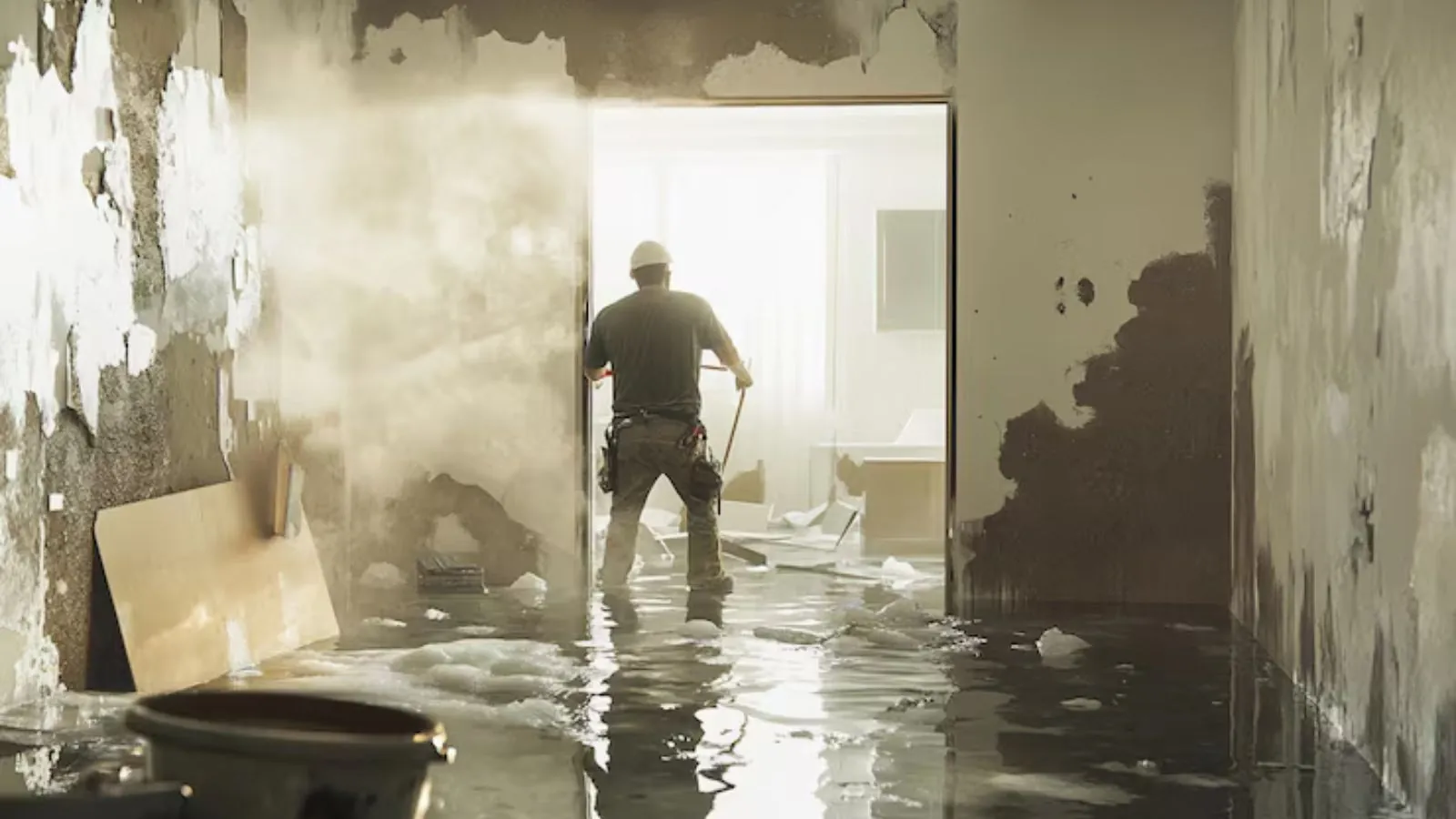
Flood damage cleanup deals with water that came from outside the plumbing system: overflowing creeks and rivers, groundwater pushing through a foundation, or heavy rain running off a lot into a building. This water is classed as Category 3 under ANSI/IICRC S500, which means it is treated as grossly contaminated until proven otherwise.
That is why flood cleanup differs from a burst pipe job. Porous materials usually come out instead of drying in place, workers wear protective gear and surfaces are cleaned and sanitized after the structure is dry.
When flood water is an emergency
If water is rising in a living area or a basement, leave the lowest level. Do not walk through water that is touching outlets, a furnace or a water heater, because standing water can carry current. Call the electric utility about power and 911 about any gas smell before you call for cleanup.
Once it is safe, photograph the high-water line and the contents, lift valuables onto high shelves and ask dispatch what to do about items that cannot be moved. Cleanup is available around the clock, and same-day response is offered when crews are available.
Flooding in the Norwalk area
The National Weather Service in Cleveland lists Huron County among the six Ohio counties covered by the major disaster declaration for the June 21 to 22, 2006 flooding. The lesson for a homeowner is practical: heavy rain in this region can overwhelm drainage, so find out whether your property is in a mapped flood area before the next storm.
Norwalk's zoning office points residents to its city GIS map, which shows wetland and floodplain locations. Look up your address there, and check the FEMA flood map for your address, because flood coverage is bought separately and the mapped risk affects what lenders require.
How flood cleanup works
- Extract the water with pumps and extraction units, then remove mud and debris
- Remove wet carpet, pad, insulation and drywall that cannot be cleaned
- Clean and disinfect framing and surfaces that stay
- Dry the structure with air movers and dehumidifiers until moisture meters read in the normal range
- Rebuild after the building is dry and stable
Heavy mud and silt require extra rounds of washing before drying begins, which is why flood jobs take longer than clean-water jobs. Structural drying describes the drying stage, and water extraction covers the pumping stage.
| Question | Plumbing leak | Flood water |
|---|---|---|
| Usual category | Category 1 or 2 | Category 3 |
| Carpet and pad | Often saved if dried fast | Usually removed |
| Drywall | Cut above the wet line | Often removed past the wet line |
| Insurance | Often covered if sudden | Usually needs separate flood coverage |
Flood water is not a do-it-yourself job when it reaches walls.
Flood insurance notes
Standard homeowners policies usually exclude flood damage, so check your policy or ask your insurer whether you have separate flood coverage. A new flood policy usually carries a waiting period of about 30 days under FEMA's program, so a policy bought after a storm warning rarely helps with that storm.
If you do have coverage, your adjuster will want photos, a list of damaged items and records of the cleanup. Keep damaged items until the adjuster has seen them, unless they are unsafe.
What affects flood cleanup cost
Flood jobs are scoped after an on-site look because many factors apply:
- Depth and duration of contact with the water
- Water category and the protective gear it requires
- Square footage and the number of levels reached
- How much drywall, insulation and flooring must be removed
- Days of drying and the rebuild afterward
Flood damage is usually excluded from standard homeowners policies, so confirm what you have. Want your real number? Call dispatch. If sewage came back up through drains, the sewage page applies as well.
Flood Damage Cleanup questions in Norwalk, OH
Do you handle Flood Damage Cleanup emergencies at night or on weekends in Norwalk?
Yes. Floods rarely arrive on a schedule, so dispatch is staffed every night, weekend and holiday. Same-day response is offered when crews are free, and during a widespread event calls are handled in order of need. Stay out of the water, keep children and pets away and call the utility about any electrical or gas hazard before you call.
Is flood water in a basement dangerous?
It can be. It may carry sewage, chemicals and bacteria, and it can reach electrical equipment. Stay out of deep water, wear boots and gloves for any contact and let professionals handle removal.
How is flood damage different from storm damage?
Flood damage is rising or surface water entering from outside. Storm damage covers wind and rain getting through the roof or walls. The storm damage page explains that case, and policies often treat the two differently.
Can flooded drywall be saved?
Seldom. Contaminated drywall and insulation are normally removed past the wet line, then the framing is cleaned and dried before new material goes in.
Water still spreading in Norwalk? The dispatch line answers around the clock.