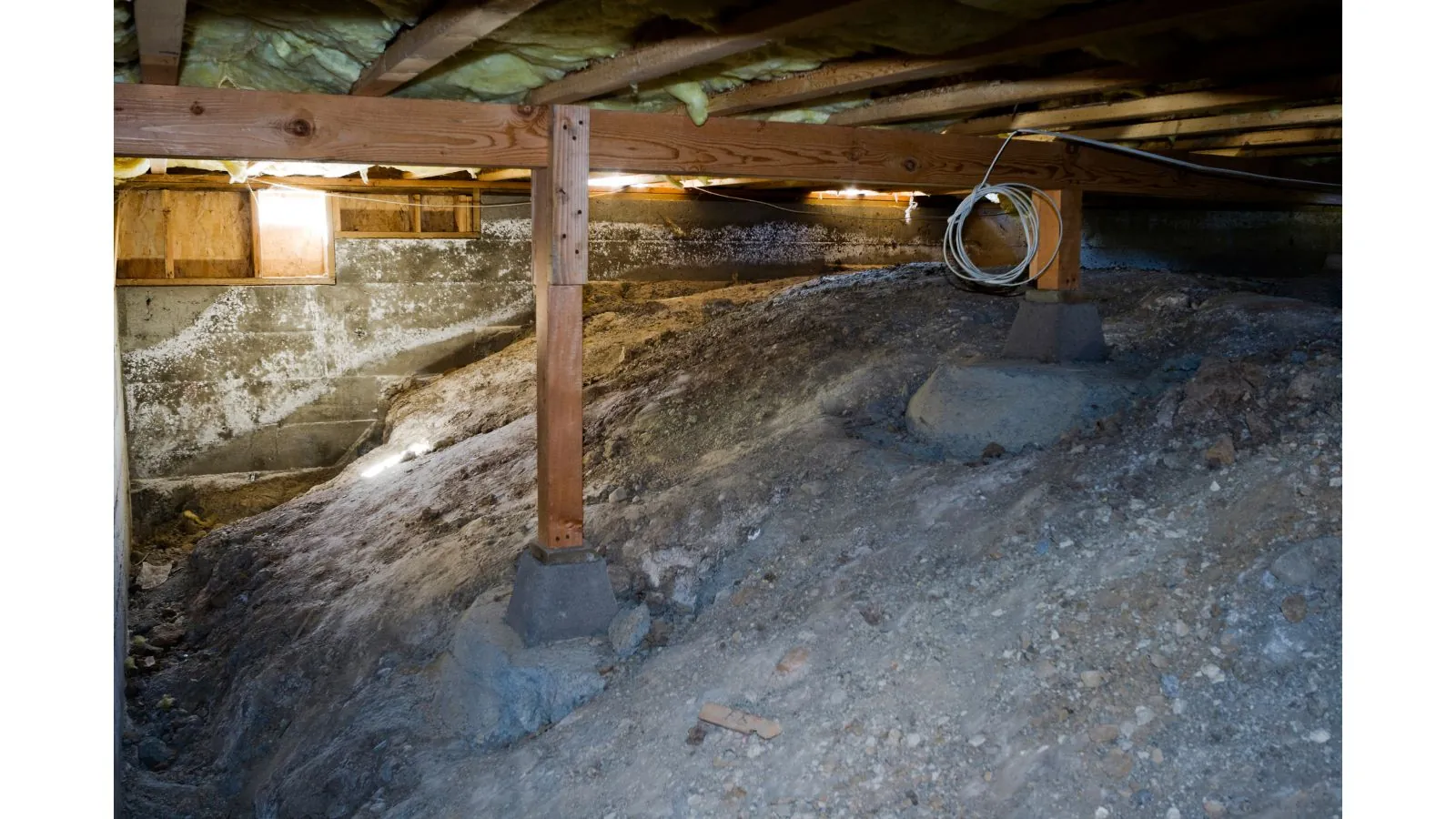
A crawl space is the shallow void between the ground and the floor of a house. Water gets in from rain running toward the foundation, groundwater, a leaking supply line or a drain, and from humid air condensing on cool surfaces. Because nobody goes in there often, crawl space water damage can sit for months.
Not every Norwalk home has a crawl space, and the basement page covers the full-depth cellar. Where a crawl space exists, the wood joists, subfloor and insulation above it are the parts at risk.
What water does under a floor
Wet insulation sags and stops insulating, which makes floors colder. Wet joists and subfloor can soften and grow mold if they stay damp. High humidity under the house rises into living space, bringing a musty smell. Pests are attracted by damp wood. Floors above may cup, squeak or feel soft.
| Source | Typical sign | Direction of fix |
|---|---|---|
| Rain and surface water | Water after storms, standing near vents | Grading, gutters, sump or drainage |
| Plumbing leak | Constant drip, wet joists below a bathroom | Plumbing repair, then dry |
| Humidity | Damp insulation, condensation on ducts | Dehumidification and vapor barrier |
| Groundwater | Water that rises in wet seasons | Drainage solutions, sump |
A drainage note for Norwalk
The city's own GIS map shows wetland and floodplain locations, which is a first check of whether your lot sits in a low area. Norwalk's NOAA normals list about 40 inches of precipitation a year, so roof runoff and downspout discharge matter. Gutters that dump at the foundation corner send water straight toward a crawl space vent.
The practical step is to extend downspouts away from the house and make sure the soil slopes away from the foundation. Restoration dries the space, but drainage stops the water from coming back.
Cleanup and drying steps
- Extract standing water with a small pump or extraction unit
- Remove soaked insulation, which will not recover
- Measure the joists and subfloor with a moisture meter
- Run air movers and a dehumidifier sized for the space
- Clean and sanitize if the water was Category 2 or 3
- Check for mold and arrange testing if growth is present
Work in a crawl space is cramped and involves dust, insect nests and sometimes bare dirt, so crews use protective gear. A vapor barrier on the ground, a plastic sheet that blocks ground moisture, can help prevent a repeat.
Water you cannot see under a floor still dampens the wood above it.
Mold under the floor
Dark growth on joists and a musty smell mean mold may be present. The ANSI/IICRC S520 standard guides assessment and removal, and the mold remediation page explains the process. Health questions belong to your physician, and the work starts with fixing the moisture source.
If water came in through the floor from a pipe above, burst pipe water damage covers the shutoff steps.
What affects crawl space cleanup cost
Access is a major factor in crawl space work:
- Clearance and ease of entry
- Amount of water and its category
- Insulation that must be removed and replaced
- Area of joists and subfloor needing drying
- Mold removal if growth is present
- Drainage or vapor barrier work to prevent repeats
Sudden water from a pipe is often covered by homeowners policies, while seepage and humidity over time often are not. Check your policy or ask your insurer. Want your real number? Call dispatch.
What to ask about the vapor barrier
A torn or missing vapor barrier lets ground moisture rise into the floor system, so ask whether one is in place and in good shape. Fixing the water source and the barrier is part of keeping the space dry after cleanup.
Crawl Space Water Damage questions in Norwalk, OH
Is a wet crawl space always a problem?
A damp crawl space after heavy rain deserves attention, and one that stays wet is a problem. Moisture readings in the wood tell you whether it is drying or staying damp.
Can I dry a crawl space with a fan?
Fans alone rarely work, since the air outside can be as humid as the air below. A dehumidifier and air movers sized for the space work much better.
Should insulation under the floor be replaced?
If it got wet and sagged, usually yes. Wet insulation holds water against the subfloor.
Water still spreading in Norwalk? The dispatch line answers around the clock.