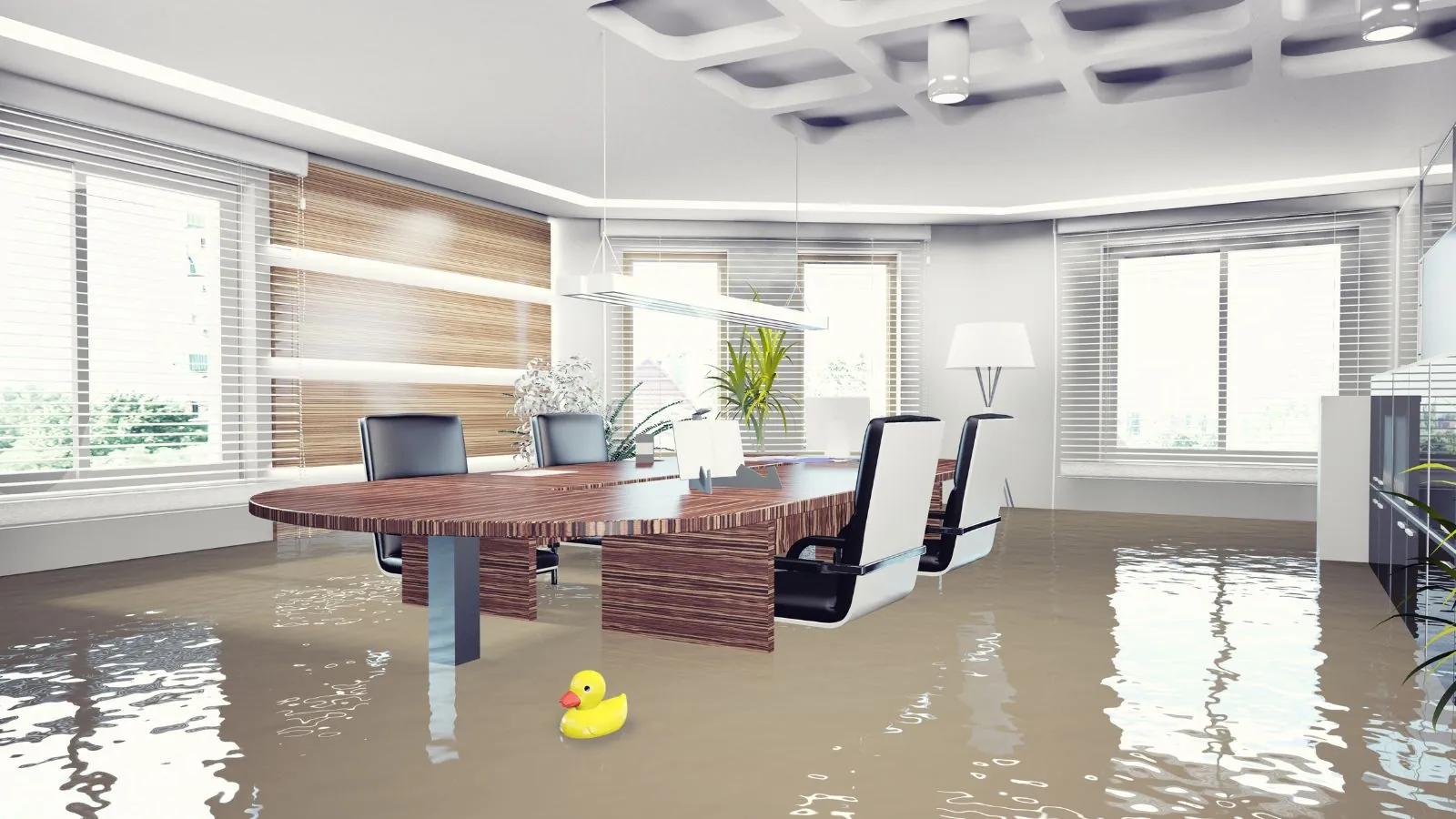
Commercial water damage is a business problem as much as a building problem. A burst line over a stockroom, a sprinkler head that fails, or a roof leak over an office all cost money while the space cannot be used. Response is organized to limit both the damage and the downtime.
This page covers businesses, multi-unit buildings and other non-residential property in Norwalk. Homes follow the same drying science, but commercial work adds access, scheduling and documentation demands.
When a commercial water loss is an emergency
Water in a business is an emergency when it is still running, when it reaches electrical equipment, inventory, records or a server area, or when customers or staff must be kept out. Close the nearest shutoff, protect or move what can be moved, and leave electrical equipment alone if it is in or near the water.
Call the utility about any electrical or gas risk, and the fire department if a sprinkler is discharging. Dispatch answers every hour of every day, and same-day response is offered when crews are available.
What is different from a home job
- Access: a crew needs a contact, keys or codes and sometimes security clearance
- Scheduling: drying is staged to keep part of the business open when possible
- Large floor areas that need many air movers and several dehumidifiers
- Building systems such as sprinklers, elevators and HVAC
- Documentation for the owner, the landlord and the insurer
Tenants in a shared building should tell the property manager at once. In multi-tenant spaces, water travels through shared walls and ceilings to neighbors, so quick notice limits the number of affected units.
Norwalk's roads and business areas
U.S. Routes 20 and 250 and State Routes 13, 18 and 61 run through Norwalk, and the Ohio Turnpike lies about 3.5 miles north of the city limits. When you call after hours, tell dispatch which road your business is on and which entrance to use, since a clear address shortens the first visit.
The city's zoning office page says commercial building permit applications link to the Huron County building department. For repairs that involve more than drying, ask the zoning office and the county which approvals apply.
| Task | Why it matters |
|---|---|
| Stop the water at the nearest shutoff | Prevents more damage |
| Call the landlord or property manager | Shared walls and ceilings spread the loss |
| Photograph and list damaged stock | Supports the insurance claim |
| Move records and electronics to dry ground | Paper and electronics fail quickly when wet |
| Note outage and downtime | Business interruption claims depend on records |
Every hour of downtime costs a business more than the water does.
How commercial drying proceeds
After extraction, technicians map the moisture and dry floors, walls and ceilings with air movers and dehumidifiers sized for large spaces. In stores and offices, ceiling tiles, carpet tile, insulation and drywall are the most common materials removed. A written scope and daily logs are the paper trail the insurer will ask for.
For the basics of drying see structural drying and dehumidification. A storm-caused loss follows the steps on the storm water damage page, and a failed pipe is covered by burst pipe water damage.
What affects commercial water damage cost
Business jobs are scoped after a walk-through:
- Floor area and number of rooms
- Water category and building materials
- Equipment days and after-hours labor
- Inventory, records and equipment that must be moved
- Staged work to keep part of the business open
Commercial property and business interruption policies vary, so check your policy or ask your insurer or broker what applies. Tenants should read the lease for who is responsible. Want your real number? Call dispatch.
Shops and offices near Main Street can find local details on the downtown Norwalk page.
Commercial Water Damage questions in Norwalk, OH
Do you handle Commercial Water Damage emergencies at night or on weekends in Norwalk?
Yes. Business water losses happen overnight and on weekends when nobody is on site, and dispatch takes calls all night. A crew can be sent that day if one is free. Tell dispatch who can give access, where the main shutoff is and whether electrical or sprinkler systems are involved.
Can my business stay open during drying?
Often partly. Crews can stage work so some areas stay usable, though noise, equipment and humidity limit what is practical. Describe your hours and the sensitive areas when you call.
Do you work with property managers and landlords?
Yes, the work is documented so property managers, landlords and insurers can follow it. Share the contact for the building owner when you call.
What if water reached inventory or records?
Photograph and list everything first, move what is dry out of the area and ask about salvage. Paper and electronics are time sensitive, so tell dispatch right away.
Water still spreading in Norwalk? The dispatch line answers around the clock.