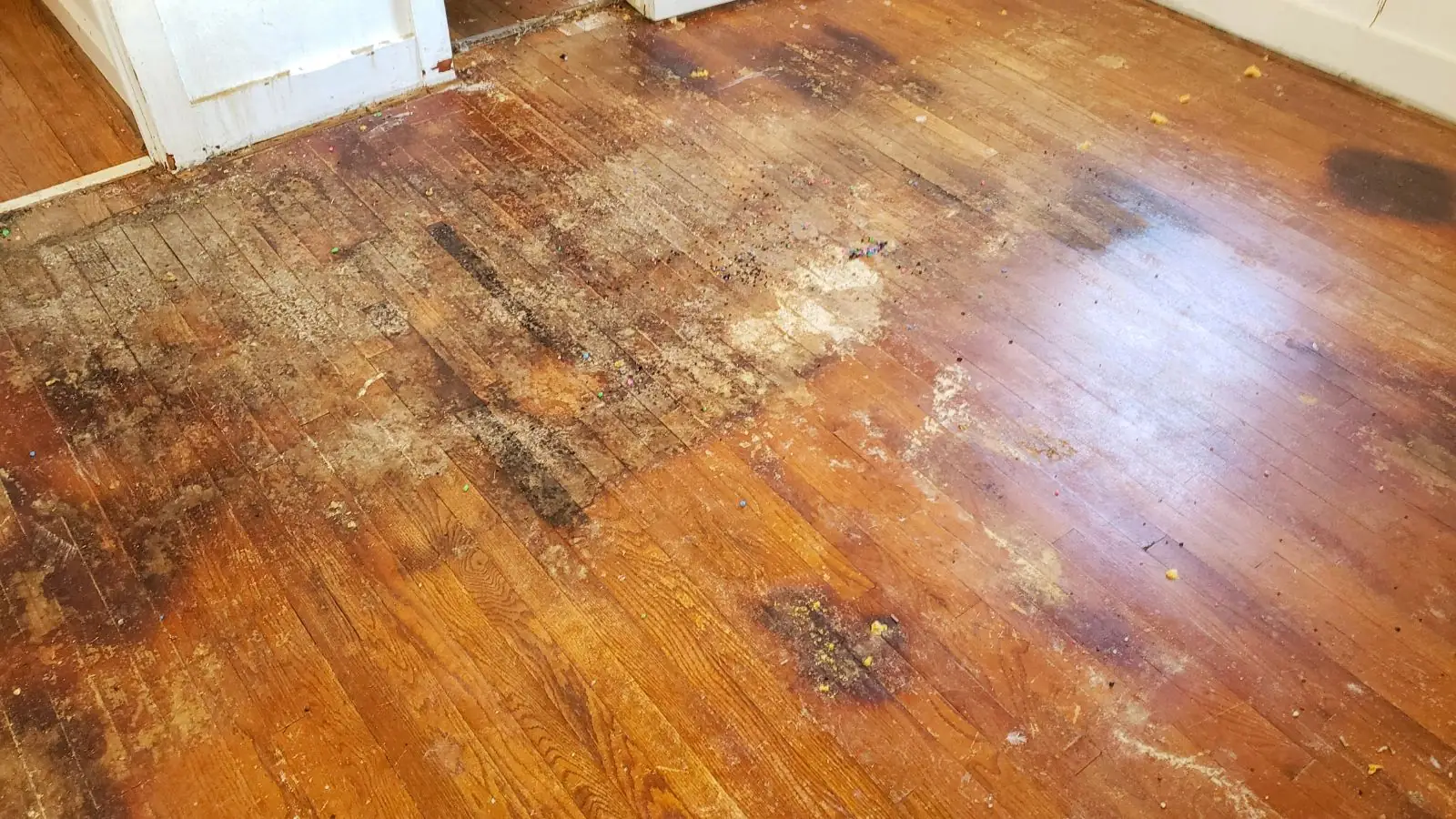
Wood is a favorite food of mold, and it is also porous, which makes the job harder than cleaning tile. Mold can grow on the surface of a board, or it can send threads into the grain. The difference decides whether a board can be cleaned or must be replaced.
This guide is about wood in homes: trim, framing, joists, subfloors and furniture. It focuses on the limits of cleaning, since that is where most do-it-yourself work goes wrong.
Why wood holds on to mold
Wood absorbs water, and wet wood can hold it for a long time. Mold growing on a damp board starts at the surface and, if the wood stays wet, works deeper. Surface cleaning removes what is visible but not what is inside, and if the board stays damp, growth returns.
| Wood item | What mold looks like | Typical approach |
|---|---|---|
| Sealed furniture or trim | Surface film | Clean with detergent, dry and re-finish if needed |
| Unfinished framing and joists | Dark patches, sometimes deep | Clean, sometimes sand or media blast, and dry fully |
| Subfloor under a leak | Dark staining with soft spots | Replace soft sections, clean and dry the rest |
| Rotted or crumbling wood | Soft, crumbly or hollow-sounding | Replace, since it has lost strength |
Check the wood before you clean
- Probe the board with a screwdriver. Wood that crumbles or lets the tip sink in has rot, not just mold
- Check the moisture with a meter if you have one, since wet wood will grow mold again
- Look for the cause, such as a leak above or poor ventilation below
- Note how much surface is affected, since large areas call for professional work
Surface cleaning, step by step
Wear protection
An N95 respirator, gloves and eye protection.
Vacuum first
A HEPA vacuum removes loose growth without stirring dust.
Clean
Use detergent and water on the surface, wiping in one direction.
Dry thoroughly
Use a dehumidifier and fans until the wood reads dry.
Professional work on structural wood sometimes includes sanding or media blasting, which removes the surface layer under containment. That is a remediation step and not a homeowner job, since it throws large amounts of dust into the air.
Wood in Norwalk crawl spaces and basements
Norwalk's NOAA 1991 to 2020 normals list about 40 inches of precipitation a year. Wood joists over a crawl space or beams in a basement are the most likely framing to stay damp after wet years. Once a year, check them with a flashlight and a screwdriver after the wettest season.
The city's GIS map shows wetland and floodplain locations, so look up your lot. A low-lying lot may see more water under the house, which is where wood framing is most exposed.
When to call a professional
Call when the affected wood is structural, when the area is large, when the wood is soft or when mold returns after cleaning. A remediation company works to the ANSI/IICRC S520 standard, and the mold remediation page describes the steps. If the cause is water below the house, the crawl space page explains the drying that must come first.
Wood that stayed wet because of a plumbing failure points to burst pipe damage as the root cause. Ask your state agency whether mold work is licensed in Ohio before hiring, and do not accept a promise that mold will not return.
Wood that is dry and clean does not grow mold, so dryness comes first.
Homes in Collins and Milan have the same wood problems, and the dispatch line covers them.
Signs the wood is past surface cleaning
Press a screwdriver tip into the wood. If it sinks in easily, or the board feels soft, spongy or crumbles, the damage is structural and cleaning will not restore it. Framing, joists and subfloor in that condition should be looked at by someone qualified before you rely on them to hold weight.
Surface mold on sound wood is a different case. It is usually on the face of the board, the wood is firm and the area is small. Even then, drying comes first. Wood that stays above normal moisture will grow mold again, which is why measured drying matters as much as scrubbing.
Protect yourself while you work
Wear a fitted respirator, gloves and eye protection, and keep the room closed off from the rest of the house. Do not sand dry mold, because that sends spores into the air. If the job is larger than a small patch, mold remediation crews use containment, and Willard and Milan callers can describe the job by phone first.
Do not paint over mold or seal it in with primer alone. Coatings can hide growth for a while, but if the wood stays damp the mold will usually come back through the finish.
Questions homeowners ask
Can I sand mold off wood?
Light sanding can remove surface growth on some wood, but it creates dust, so it is best done under containment by professionals. A homeowner should use a HEPA vacuum and cleaning with detergent.
How do I know if wood is rotten?
Press a screwdriver into it. Wood that crumbles, feels spongy or lets the tip sink in is rotted and should be replaced.
Will a dehumidifier stop mold on wood?
It helps by drying the air and the wood, but it will not remove growth that is already there.
Water still spreading in Norwalk? The dispatch line answers around the clock.