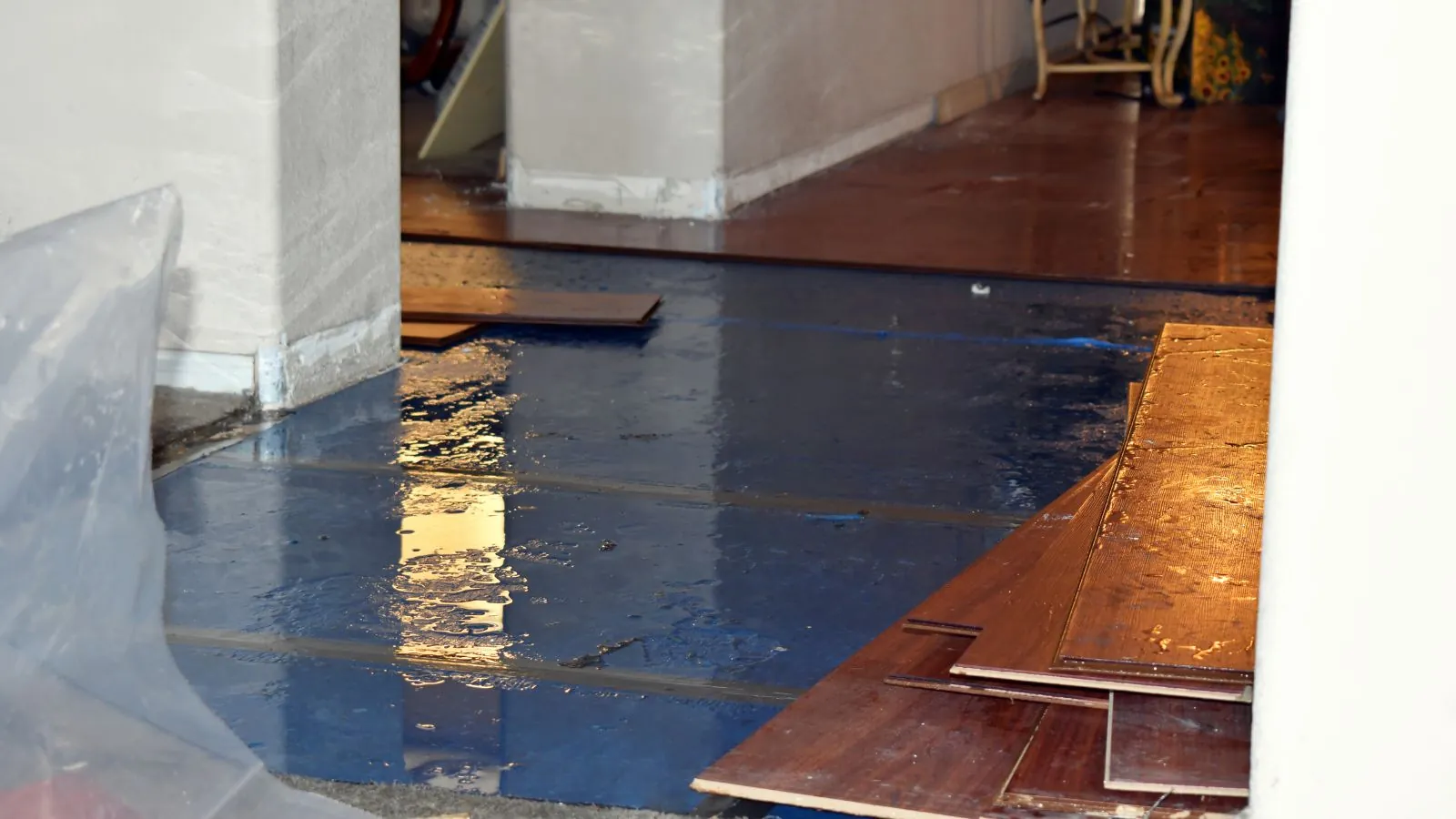
Plenty of small water problems can be handled at home. A glass of water on a floor, a dripping faucet or a damp towel needs no restoration crew. The line moves as the water gets deeper, dirtier or older, so it helps to know the points where a home fix stops working.
This guide describes that line in terms a homeowner can check with eyes and hands. When you are unsure, the cost of a call is small and the cost of missing hidden moisture can be large.
What you can usually handle yourself
- A small spill of clean water on a hard floor, wiped up right away
- A few damp towels or a wet bath mat, washed and dried
- A slow faucet drip caught early and fixed, with the area dried within a day
- Condensation on windows, wiped and ventilated
Use a wet vacuum for small clean spills, and keep it away from outlets. Open windows only if the outside air is drier than the inside air, and run a fan or dehumidifier.
What needs a professional
| Situation | Home fix? | Why |
|---|---|---|
| Clean spill on tile | Yes | Dries quickly and has nowhere to hide |
| Water on carpet for more than a day | Call | Pad holds water below the surface |
| Wet drywall or baseboards | Call | Water wicks up and hides in the cavity |
| Water from a drain, toilet or outdoors | Call | Contaminated water needs protective gear |
| Any water near electrical panels or outlets | Call and stay out | Electrical hazard |
| Ceiling stain or sag | Call | Water is above and may be heavy |
| Musty smell after a leak | Call | Moisture may be hidden |
Water type matters most. Clean water from a supply line can be handled more casually than water from a drain or the outdoors, which can carry bacteria. The ANSI/IICRC S500 water damage standard sorts water into three categories for that reason.
The time factor
EPA guidance says to dry water-damaged materials within 24 to 48 hours to limit mold. A job that could have been a fan and a towel on day one can become a drywall replacement by day four, so do not wait to see whether it goes away.
Norwalk's weather works against home drying
Norwalk's NOAA 1991 to 2020 normals list about 40 inches of precipitation a year, and summers can be humid. On a humid day, open windows bring in moisture, and fans alone cannot dry thick materials. In winter, outdoor air is dry but cold, and a closed, heated house with a dehumidifier dries more reliably.
Milan is near the Huron River, and NOAA publishes a Huron River at Milan gauge. If the river is high after heavy rain, expect basements near it to take water, and call early instead of trying to dry a soaked basement with box fans.
Signs the problem is bigger than it looks
- A floor that feels spongy or cool
- Paint bubbling above the baseboard
- A musty smell that gets stronger
- Water that returns after you dry it
- Rooms that feel humid long after the spill
A moisture meter or a thermal camera can show hidden water, and a crew will measure before deciding what to remove. Wet carpet and wet walls are the two places where do-it-yourself drying most often fails.
When in doubt, a measurement settles the question.
People in Collins and Willard can call the same line and describe what they see.
The moisture you cannot see
A floor that feels dry can still have wet subfloor, and a wall that looks fine can have wet insulation inside. Without a moisture meter you are guessing, and a wrong guess is how mold ends up behind a fresh coat of paint.
If you do start drying yourself, run fans and a dehumidifier, open cabinet doors and lift the base of drywall so air can move. Check again each day, and call for help if the area does not feel drier within a day or two.
Rule of thumb
A small spill of clean water caught within an hour can be a do-it-yourself job. Water that has sat for a day, covers a large area, touches drywall or comes from a drain should be assessed. See structural drying, and note that Monroeville and Milan callers are served by the same line.
Think about time as well as skill. Drying properly means checking the space every day for several days, and many people cannot be home for that. A crew that comes back with a meter takes that burden off you.
Questions homeowners ask
Can I dry a wet carpet with fans?
For a small, clean spill caught within hours, sometimes. If the pad is wet or the water sat for a day, fans alone usually leave moisture behind.
How do I know if water is hiding in a wall?
Paint bubbles, swollen baseboards, a musty smell or a cool, damp feel are signs. A moisture meter confirms it.
What if I am not sure whether to call?
Call and describe it. If a crew is not needed, you will be told, and if one is, the early start saves material.
Water still spreading in Norwalk? The dispatch line answers around the clock.